


The establishment’s defensive perimeter, the media, is being breached. As Larry Ellison secures CNN and Dina Powell takes the helm at Meta, the institutional hostility toward the President is being replaced by a pragmatic, if nervous, pivot. Even at The Washington Post, Jeff Bezos’s decision to purge the newsroom of both writers and (all the) photographers, it is a tacit admission that “pictures matter more than words”—and that the coming pictures and narratives, provided by the President’s evidence, may tell a story the old guard can no longer spin.
Yet, even as the “White Hats” celebrate this turn of the tide, the MAGA base remains in a state of high-octane frustration. They are waiting for a “Perry Mason” moment in a world that has more in common with The Wire. They seek courtroom justice for crimes so vast—from the engineering of forever wars to the shadow operations of the Epstein network—that the administrative machinery of the law simply cannot process them. In a system where state-sponsored terror is rebranded as “negotiation” and election irregularities are easily dismissed as “a hacker did it, not me,” the courtroom is less a hall of justice and more a hall of mirrors designed to ensure that no one is ever held accountable. The crimes currently being unveiled occupy a gray zone of administrative impunity. When a prior administration funnels billions into a conflict, or a "negotiating strategy" fuels a terror proxy, it is rarely "illegal" in the technical sense—it is simply policy, and that’s not illegal. Arrests remain a fantasy because the law has been meticulously engineered to protect the very machine that runs it.
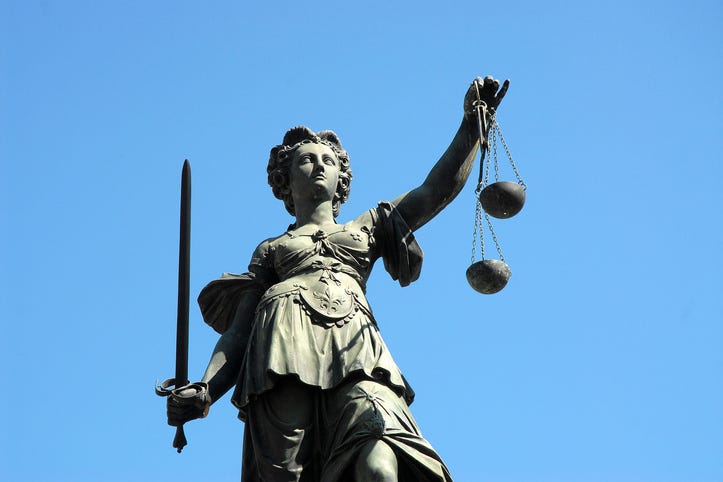
Worse, efforts to prosecute individuals will lead to an old-fashioned civil war because so many will prefer to fight rather than be held accountable. The system is outnumbered by the wrongdoers. I should emphasize that the “wrongdoers” think they are in the right. Many of the people we are talking about are brilliant and have held the nation’s highest-level security clearances. They are sure that populism represents an existential threat to the traditional way of doing things. This is true.
Priests vs Populists
The core of this conflict is the collision between a secular priesthood and a populist insurgency. The priesthood—a class of technocrats, entrenched bureaucrats, and rule-makers—operates on a foundational faith: that the system is more important than the citizens it serves. To them, the “Process” is sacred, and globalism is the ultimate cathedral.
Naturally, they view the populist as the ultimate heretic—one who values power and common sense over the liturgical complexity of the administrative state. The “No King’s Day” demonstrations and the feverish cries of “Dictator” are more than mere political protests; they are the “soft civil war” of a clergy sensing its own obsolescence. As the accountability process gains momentum, we must ask: Will the High Priests burn the temple down via civil unrest to prevent the populists from seizing the altar? Or, will the Populists destroy the temple in their search for the truth?
This is why Trump is so intent on the following:
1. Getting the proof. Gathering the server data. Getting the bad guys to turn state’s witness. Showing the cash flows from the dark side that have lined the pockets of American officials (this is easy now, given AI + Palantir).
2. Showing the proof, knowing that nobody is going to change their mind because nobody knows what’s real and what’s unreal anymore. Thank you AI-generated content and fake news.
3. Producing undeniable and mythic level results by bringing a range of nations out of Communist control (Cuba) or kleptocracy control (Iran, Venezuela) back into a commitment to capitalism and personal freedoms. Conclude a Yalta-like Peace deal with the other superpowers, Russia and China, that allows a competitive collaboration without the risk of existential confrontation and the normalization of economic and political relations. Use these developments to mortally undermine the so-called Deep State both within the US and internationally.
Keep in mind that these proof points are not necessarily intended to secure prosecutions. They may be simply aimed at neutralizing the target. As Barbara Boyd explains here, Presidents can use Executive Order 12333 to go after their internal opponents. The idea is to launch counterintelligence operations as distinct from criminal investigations. All means necessary are then legal, “from black bag jobs, to wiretaps, to contracting stuff out to the media.” Thus, one way to interpret Trump’s strategy is not primarily as a legal campaign aimed at prosecutions, but rather as a political and informational campaign aimed at neutralization. In that reading, the first objective is to assemble evidence networks: financial flows, digital records, intermediaries, and cooperating witnesses that can map relationships between state actors, private influence networks, and transnational corruption. The second objective is to disclose enough of that picture to damage the legitimacy of entrenched institutions, especially in an environment where public trust is so degraded that evidence alone rarely changes minds. The third objective is to produce outcomes so large they override the argument—major geopolitical realignments, normalization deals between superpowers, or regime shifts that can be framed as historic proof of governing capacity and legitimacy.
In this framework, the goal is not a traditional courtroom victory. It is strategic neutralization: a meticulous campaign designed to reduce adversaries’ room to maneuver, discredit their networks, and permanently shift the balance of institutional power. The strategy hinges on an understanding of the intelligence boundary. The “High Priests” in Washington have long operated with a sense of administrative impunity, confident that the domestic legal system—hamstrung by mutual kompromat and procedural gridlock—cannot touch them. They even carefully arranged for the Smith-Mundt Act to be modernized, lifting the ban on domestic propaganda so they could legally target the MAGA movement with their own “official” narratives.
But Trump’s counter-move is to “leave the room” of domestic law entirely. By relying on Executive Order 12333, he shifts the battlefield to the foreign arena where the rules of engagement are different. While his opponents will reflexively claim he is “targeting Americans” (a violation of the Order), Trump’s method is more precise: he is going after the foreigners abroad who facilitated the subversion of the American process.
The primary targets aren’t in D.C.; they are in Venezuela, Iran, Cuba, and across Europe. These foreign actors—the fixers, the intelligence proxies, and the bagmen of the “Shadow Bureaucracy”—are the ones who hold the data. When they provide their testimonies, they won’t be talking about their own citizens; they will be talking about the Americans who commissioned the script. Perhaps that’s why all the resignations are happening abroad rather than in the US?
By seizing these external ledgers, Trump aims to fuse exposure, disruption, and mythic-scale outcomes into a single strategy of regime-level repositioning. It is the ultimate “Incentive Insurgency”: proving that while the High Priests may own the temple in Washington, the evidence of their “sacrilege” is scattered across the globe, waiting to be brought back as the fuel for a final, undeniable apotheosis.
The Forensic Validation of the “Unveiling”
To the casual observer, this may sound like geopolitical delirium—a narrative too expansive to be true. Fine. However, what matters in the final analysis is not our speculation, but the demonstrated intent of the leader of the most powerful nation on Earth.
Months ago, I proposed the arrival of an American Glasnost—a structural unveiling of truths long buried by the “High Priests.” More recently, I attempted to map the internal friction within the American power structure, illustrating how the struggle between the President and the administrative state radiates outward into what I call interstitial states: Ukraine, Venezuela, Ecuador, Mexico, Cuba, Iran and even the human body.
For those who dismissed this as “edgy,” the past few weeks have served as relentless corroboration. The headlines are no longer just news; they are a welter of forensic evidence. We are seeing the theoretical become tangible:
The shifting of alliances in the Caribbean and South America.
The disruption of established “forever war” narratives.
The sudden volatility of transnational networks that once operated with impunity.
These aren’t random events; they are the kinetic signatures of a presidency moving to dismantle a global machine from the outside in. We are past the point of “if”—we are now squarely in the “how,” watching the maps be redrawn by a leader who understands that in a lawless world, the only way to restore sovereignty is to break the rules of the game.
Epstein
The dark side of politics, once a matter of whispered speculation, is now entering a phase of terminal exposure. We are witnessing a “forensic cascade” driven by the mass declassification of the Epstein files—a library of compromise that has only begun to reveal its depths. With the Epstein files out in the open, millions of pages, thousands of videos, and hundreds of thousands of images are being forced into the light.
This isn’t just about a single financier; it is about the excavation of a decades-long narrative and power structure. The questions being unearthed are existential for the old guard:
Did prior administrations wage “forever wars” in the Middle East while knowing their primary targets were under the sovereign protection of Iran?
Was the “Russiagate” narrative a calculated domestic intelligence operation designed to paralyze a presidency?
Was the Epstein network a solo operation, or a multinational utility of statecraft that implicated the very people now fighting to keep the files redacted?
The evidence is no longer coming from leaks alone; it is being corroborated by the participants themselves. We are seeing a global wave of “preemptive departures” from the political stage. These are not merely resignations; they are the kinetic signatures of a system that can no longer guarantee the silence of its members.
Trump’s strategy is to let the “dirty laundry” speak for itself. By declassifying the archive, he is effectively deputizing the public to act as the jury. In this environment, the “High Priests” find their old spells of “national security” and “administrative privilege” failing them. When the participants begin to vanish—through resignation, arrest, or “early retirement”—it is a clear signal that the utility of compromise has finally defaulted on its debt to the truth.
We have passed the threshold of “managed” disclosures. The American Glasnost has taken on a life of its own, reaching a velocity that means no political leader—not even Trump himself—can fully dictate the timing or the magnitude of what comes next. The machine is leaking from every gasket, and the “dirty laundry” is being aired by the sheer pressure of its own weight.
This reality explains why speculation is reaching a fever pitch regarding potential pardons for Julian Assange and Edward Snowden. In the war between the Priests and the Populists, these figures are no longer mere whistleblowers; they are the living repositories of the receipts. Trump understands a fundamental truth of the “Post-Truth” era: the public is weary of political rhetoric. Many may dismiss the President’s own claims as partisan theater, but they will listen to the men who sacrificed their lives to expose the architecture of the surveillance state and the mechanics of the “forever wars.” To achieve Apotheosis by Outcome, Trump needs more than just his own voice—he needs the authenticated evidence that only these outcasts can provide.
By bringing Assange and Snowden back into the fold, Trump isn’t just granting clemency; he is weaponizing the archive. Their voices serve as a third-party validation that the “High Priests” are not the guardians of democracy, but the architects of its subversion. In this final, uncontrollable phase of the unveiling, the pardons would signal the end of the “Information Monopoly” and the beginning of a world where the truth is no longer a classified secret, but a public utility.
Lustration
When the traditional legal machinery stalls, the state often turns to Lustration. Derived from the Latin lustratio—a ritual purification intended to wash away impurities before a sacred act—lustration is the process of “cleaning house” in the absence of standard criminal prosecutions. It is not about a courtroom verdict; it is about institutional vetting, exposure, and exclusion. I am grateful to my friend Izabella Kaminska of The Blind Spot for bringing this concept to my attention.
History provides the template: the denazification of post-war Germany, the de-Baathification of Iraq, and the purging of secret police collaborators in post-Communist Eastern Europe. In these moments, the goal was not to jail every participant of the old regime, but to ensure that those who had “snitched” or subverted the system were disqualified from holding the levers of the new one.
However, there is a tension here between the administrative goal and the public’s appetite for blood. Much of the American public is currently baying for a “Scarlet Letter” outcome (the novel by Hawthorne)—the ritualistic humiliation of Hester Prynne, branded for life with the mark of her transgressions (having had sex and a child out of wedlock). But, true lustration is not a witch hunt, nor is it extralegal vigilantism. It is a targeted, state-sanctioned policy designed to prevent the recurrence of repression.
In the context of the “High Priests” and the “Shadow Bureaucracy,” lustration serves as a surgical strike. It uses confidential certificates, affidavits, and private screenings to identify those compromised by the Epstein-era networks and quietly removes them from positions of authority. The objective is institutional reform, not a permanent “Scarlet Letter.” It is a measured transitional justice framework that aims to enable a new sovereignty by ensuring that the ghosts of the old “Utility of Compromise” no longer haunt the halls of power.
The US did a lustration after WWII when it rehabilitated some 40,000 German Nazi’s because they had special skills. The American authorities did not want them joining the Soviets. So, we brought them into the US and offered then new jobs and sometimes new identities. After the fall of the Berlin Wall, Poland and the Czech Republic both underwent severe lustrations. The Czech Republic passed the “Large Lustration Act (Act No. 451/1991)” on October 4, 1991, just two years after the Velvet Revolution overthrew the Communist leadership, who had ruled since 1945 through the fierce use of the much-feared State Security (StB) apparatus. The StB had led the brutal suppression of the 1968 Prague Spring protests and supported the Warsaw Pact invasion by Russia when thousands of tanks rolled into Czechoslovakia to kill any remnant of dissent. The lustration law barred individuals with ties to the StB or Communist Paty officials or People’s Militia members, and certain military/intelligence roles—from holding key public positions for five years (initially until 1996). Screening was based on StB files and certificates issued by the Ministry of Interior. About 400,000–500,000 people were screened, with around 5% disqualified. Then they passed the Small Lustration Act in 1992. This was a complementary law that extended similar vetting to police and corrections officers.
Poland’s lustration was actually more delayed, gradual, and initially milder. It focused on truth-telling rather than outright purges. But, the anger against the old regime was more deeply rooted than elsewhere, partly because of revelations that seemingly good dissidents were actually “crypto-communist collaborators” aiding the Soviets/State Security/Communist regimes, like former President Lech Walesa (who was apparently an SB informant under the Code name Bolek). Poland’s position as a frontline state in the Cold War (with a history of Soviet domination) amplified fears that Russian influence would persist through ex-communist elites. This made lustration not just about domestic justice but about national security and sovereignty—severing ties to Moscow’s legacy.
Poland’s first Lustration Act took effect in 1997 but by 2006 and again after 2015, amendments expanded the scope. Suddenly, the right-wing PiS government clapped down on over 700,000 academics, journalists, business leaders, and private sector people, subjecting them to a witch hunt. The PiS framed it as a moral reckoning. Leaders like Jarosław Kaczyński argued that incomplete lustration allowed “post-communist oligarchs” to dominate the economy and politics, perpetuating inequality and corruption. This tied into Poland’s broader “illiberal turn,” where lustration was used to target political enemies (e.g., disqualifying rivals or exposing critics). The 2015–2023 PiS era saw further tweaks, like retroactive bans on ex-SB personnel from anti-corruption bodies, intensifying the punitive aspect. Lustration became a way to symbolically “settle accounts” with the past.
The Catholic Church’s influence (Poland being overwhelmingly Catholic) added a moral dimension: Lustration was seen as a form of atonement or purification, echoing religious themes of confession and exclusion of the “impure.” Public opinion polls in the 1990s–2000s showed strong support for exposing collaborators, reflecting a cultural demand for transparency after decades of secrecy. Economically, the rapid “shock therapy” reforms of the 1990s created winners and losers, with many blaming ex-communists (who often transitioned into business elites) for inequality. Lustration thus became a populist tool to address these grievances. Critics called Poland’s lustrations “social punishment without trial.”
To finish on lustration, consider the experience of Ryszard Kapuściński. He was a Polish journalist who witnessed many of the most important geopolitical transitions of the 20th century – the demise of Haile Selassie, the leader of Ethiopia, the fall of the Shah of Iran, the end of Idi Amin’s dictatorship in Uganda, and the battle for post-Colonial Angola. He found he could not write about what was happening without facing grave consequences. The situation is similar today. The cost of explaining reality or offering an unpleasant opinion can be extremely high. So, he kept two sets of notebooks. One was for publishing real-time stories in the press. That was his day job. That notebook paid the bills. The other notebook was for speaking unspeakable truths that print media, TV and politics did not allow to be told. He published these later, after the fact. It has been said that he had celebrity status in Poland, because the Poles read his work on global politics as “thinly disguised commentaries on communist Poland”. Kapuściński describes lustration as a moment when one breaks free from fear. He said, “This unusual process, sometimes accomplished in an instant, like a shock or lustration, demands illuminating. Man gets rid of fear and feels free.”
De-Baathification in Iraq after 2003 is an example of lustration gone wrong. De-Baathification was essentially a systematic effort to exclude former Ba’ath Party members (Saddam Hussein’s people) who had dominated the regime since 1968) from government, military, security, education, and other public sectors. It began with CPA Order No. 1 (May 16, 2003), which banned the Ba’ath Party and removed all “senior party members” (the top four ranks: full members, branch members, section members, and group members) from public positions. It initially targeted about 1% of party members (around 20,000–30,000 people), but quickly expanded to include lower ranks through investigations and appeals. But, a second CPA Order No. 2 on May 23, 2003, dissolved key Iraqi institutions, including the 500,000-strong Iraqi Army, Republican Guard, intelligence services, and ministries tied to the regime. This left hundreds of thousands unemployed overnight, including mid-level bureaucrats and soldiers who weren’t necessarily ideologues or Saddam loyalists. The country, as we all know, completely fell apart.
Conciliatism
If Apotheosis is a hero’s victory and Lustration is a surgical purge, then Conciliatism is the “Great Bargain.” This is a doctrine that prioritizes the cessation of hostilities over the pursuit of punitive purification. It is a systematic preference for reconciliation-driven stability—a choice to favor inclusion and power-sharing over the “Scarlet Letter” of retributive justice.
Conciliatism draws its lineage from the most complex peace processes of the modern era: the Good Friday Agreement in Northern Ireland, which brought former combatants into the halls of government, and South Africa’s Truth and Reconciliation Commission (TRC). In these instances, the state acknowledged a grim reality: that the pursuit of justice might trigger total collapse.
The core ethic of Conciliatism is not ad hoc compromise, but a principled stance that brings antagonists into shared institutions to ensure a durable peace. However, it carries a non-negotiable precondition: The Truth. Just as the TRC required full disclosure in exchange for amnesty, Conciliatism demands a complete “Unveiling.” In this framework, the “High Priests” and the “Shadow Bureaucracy” are granted a path to reintegration, but only after a full confession of their roles. Truth-telling is the antiseptic that prevents the “malign force” of the past from poisoning the process of the future. It is a “Truth-for-Stability” deal—a world where the ledgers are balanced not with blood, but with the raw, authenticated facts of what transpired. For a base baying for arrests, this is the most bitter pill to swallow: the realization that the price of ending the “Soft Civil War” may be the survival of the very enemies they sought to extinguish.
America Today
Will America require one of these paths—Apotheosis, Lustration, Conciliatism or Civil War? The answer is an unavoidable yes. We have not yet fully acknowledged the depth of the wounds inflicted upon the body politic, but the infection has reached critical mass. The pressure of these “apocalyptic” truths is driving us toward one of these four outcomes with the inevitability of a tidal wave.
Can we imagine, for a moment, a world where the President achieves his Apotheosis by Outcome?
In this world, the strategy of “regime-level repositioning” bears fruit. The leaders of Iran, Venezuela, and Cuba—finding themselves without the protection of the old guard—begin to sing like canaries. They reveal which American officials were on the payroll, which offshore accounts moved illicit funds, and which mechanisms were used to subvert the American political process from abroad—whether through the weaponization of migration, the shadow-management of voting systems, or the sophisticated delivery of domestic propaganda.
Imagine a world where the ledgers of Moscow and Beijing are opened, revealing the specific American names involved in undermining the Executive and Legislative branches alike. Imagine a world where the Epstein network—deprived of its “lone wolf” cover story—is finally exposed as the global utility of compromise that many have long suspected. When the “High Priests” are confronted with their own signatures on foreign payrolls or their own voices in recorded “negotiations” of subversion, the debate stops being about politics and starts being about existential betrayal.
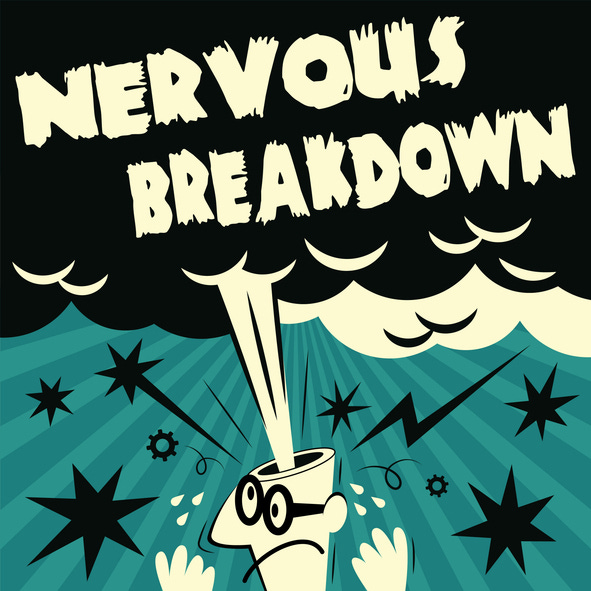
This is where the “brain-breaking” occurs. "Brain-breaking" is the sensation and the psychological hallmark of a controlled demolition of reality. When the gap between the "official story" (the liturgy of the High Priests) and the "sovereign confession" (the receipts from abroad) becomes too wide to bridge, the human mind experiences a form of cognitive vertigo. For decades, the American public has been anchored by the belief that while the system may be flawed, its foundations are solid. To find out that the foundation was actually a hollowed-out network of transactional compromise and manufactured crises is to experience a psychological apocalypse.
The “limit point” is not a legal boundary, but a social one. There is only so much “Glasnost” a society can absorb before the institutions they rely on for daily life—the banks, the courts, the media—lose their legitimacy entirely. This is why the choice between Lustration and Conciliatism is so high-stakes. Lustration assumes there is still a “clean” part of the bureaucracy left to vet. Conciliatism assumes the public can forgive the “unforgivable” in exchange for the “unbearable” truth.
If we exceed the public’s capacity to process this betrayal, we move beyond the three options into a fourth, darker territory: a total systemic fracture. Some are counting on this “brain-breaking” fatigue, betting that the public would rather live with a comfortable lie than a system-breaking truth. Perhaps Trump’s gamble is the opposite: that the only way to achieve Apotheosis is to force the public through the breaking point, believing that on the other side of the “apocalypse” lies the only version of America that is actually real.
As it stands, most are already locked into their opinions. They’ve already chosen sides and will brook no arguments to the contrary. This is a world where all eyes have been focused on the ugly details of Jeffrey Epstein’s sex life while steadfastly refusing to see that his story also involves murders, tortures, very terrible medical and genetic experiments, and inhumane practices, as well as money laundering and logistics on a scale that is only possible with government backing. To accept the full breadth of the Epstein story is to accept that the “global machine” isn’t just broken, it’s predatory by design. By focusing on the “sex life,” the public stays in the realm of morality. But, if Epstein is about logistics, then the public must enter into an inspection of the realm of power. The “High Priests” rely on this cognitive dissonance. They know that if the public ever truly connects the dots between a private island and