


I’ve been in Sydney for the Young Presidents’ Organization annual meeting, and looking at the local property market, I’m struck by a harsh reality: Sydney is the perfect example of a global unwillingness to adapt. We are watching a generational economic war play out in Sydney and Melbourne. Baby boomers are fighting to protect the wealth they have; young people are fighting to create the wealth they need.
Research confirms that Boomers resist technological change, often out of fear or pride. Older Consumers and Technology: A Critical Systematic Literature Review (from Springer 2023) suggests that Baby Boomers (generally defined as those born between 1946 and 1964) exhibit some level of resistance to technological change and innovation. It does not help that Gen Z (1997–2012) and Millennials (1981–1996) continue to design everything from tech instructions to restaurant menus with impossibly small lettering. It’s unintentional sabotage. There are real side effects of design defaults that are optimized for younger eyes, habits, and the smaller screens youth prefer. It keeps the oldies out of the game. But, whatever the cause, the problem is that Boomers are blocking wealth creation.
Nowhere is this clearer than in housing. In Sydney, Boomers rattle around in $5m+ mansions, while young people fight to get any tiny rental property due to the 2% rental vacancy rate. The irony is that the solution already exists. We have modular housing. We now have 3D-printed Starbucks going up in the US in a matter of days.
The technology to fix the housing crisis is here. The young are ready to build tomorrow’s economy. The only thing stopping them is the stubbornness of the past.
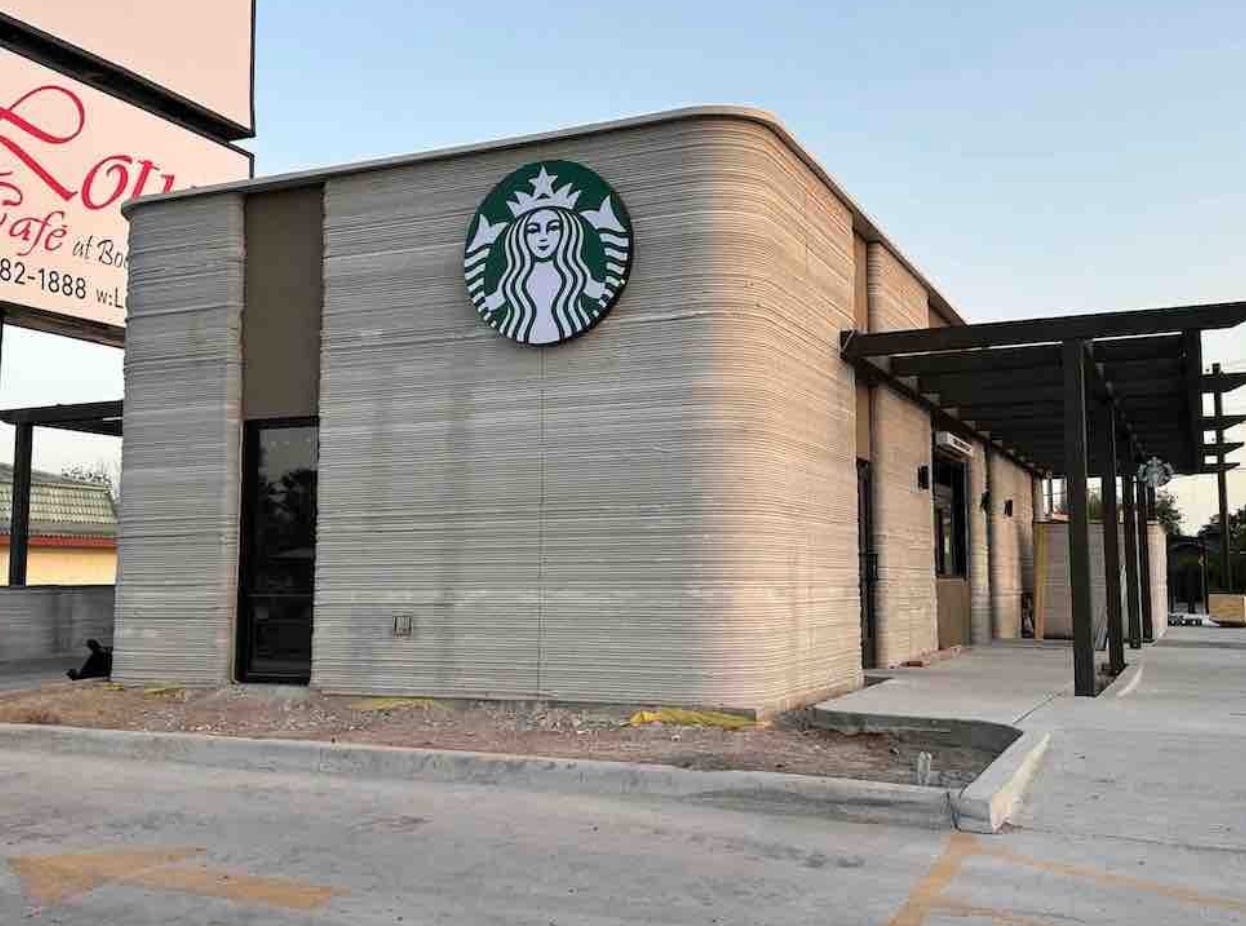
Australia is barely beginning to deploy these new technologies. A company called Luyten is leading the way with 3D printing technology. The CEO of Luyten built a home for himself using this new methodology just to show that it could be done. It took three days. In Austin, Texas, where I now live, we already have entire 3D-printed communities. Check out Wolf Ranch. Australia’s 3D construction market is projected to hit USD 5.4B by 2026. In addition to the Luyten homes, there’s Contec, which is 3D printing cyclone-rated, fire-resistant duplexes in Tapping, Perth. These were built in just 18 hours using mobile robotics. They offer two-story, three-bedroom residences using specialised concrete that’s three times stronger than brick. That’s what the young want. They’ll move to be part of innovation.
It always happens where we least expect. In the US, our new tech center is Austin. Silicon Hills they call it, though it’s way beyond silicon. Austin and Texas generally has a massively diversified economy that includes oil, gas, space, Tesla, chip production, creative agencies, agribusiness and manufacturing. It is increasingly rivalled by Raleigh-Durham, North Carolina, which is the epicenter of the famous Research Triangle (Raleigh, Durham, Chapel Hill), powered by Duke, the University of North Carolina, and North Carolina State. It’s exploding in biotech, AI, cybersecurity, gaming (Epic Games), automotive production (BMW in Spartanburg), and enterprise software (SAS, IBM, Cisco, Lenovo, Red Hat). The number one location for corporate headquarters in America is now Nashville, Tennessee. Detroit is booming, having become the number one city in America for commercial and industrial designer density. It’s the #2 metro area for engineers and technicians, with more than 90,000 engineers, which is nearly three times more than the U.S. average and more than New York, Los Angeles, and Chicago. The Gold Coast in Australia is also benefiting from the same forces of change.
The pioneering spirit of the young and the financially displaced is set to transform the parts of Australia that the old folks write off. Where are they going? Today they are heading to Greater Geelong (VIC), which now accounts for some 9.3% of total net internal migration to regions. This is up sharply, perhaps as much as a nearly 100% annual increase. The Sunshine Coast (QLD), Lake Macquarie (NSW) and Moorabool (VIC). But the Gold Coast is drawing in creators.
This is in part because Brisbane has Tabua. The Google-led Australia Connect link provides the first direct US-Australia link outside Sydney. It also has a growing space economy thanks to Gilmour Space Technologies, which is headquartered on the Gold Coast. They achieved Australia’s first commercial orbital launch attempt (Eris rocket test in 2025 from Bowen), secured massive funding ($217 million AUD in early 2026), and are scaling sovereign launch/satellite capabilities. Though space is less and less about launching rockets and more and more about the management of remote fleets of robotics.
Strangely, Australia has yet to realize that its exceptional strengths in mining and refining are much needed in space. Capricorn Space, a Western Australia-based ground segment provider is playing a supporting role in AstroForge‘s mission by providing critical ground station services for communications and tracking. AstroForge is a California-based startup (founded in 2022) focused on commercial asteroid mining. They are specifically prospecting and eventually extracting platinum-group metals and other critical resources from near-Earth asteroids to supply Earth’s high-tech needs. There are other Australian space firms leaning into space mining. Fleet Space Technologies, based in Adelaide, South Australia, is a leading Australian space exploration company that’s revolutionizing mineral discovery through its flagship product: ExoSphere (ExoSphere by Fleet® or ExoSphere™). It launched as the world’s first end-to-end, satellite-enabled mineral exploration platform, integrating space technology, advanced geophysics, edge computing, and AI to deliver fast, precise, and low-impact subsurface imaging. They help asteroid mining companies find critical minerals (like copper, lithium, uranium, and rare earths). There is no reason that the Australian Gold Coast can’t be like Florida’s “Space Coast”. But, instead of focusing on launching rockets, it could focus on space-based power, space mining and refining, Earth observation and mega-constellations of satellites (an Aussie Starlink).
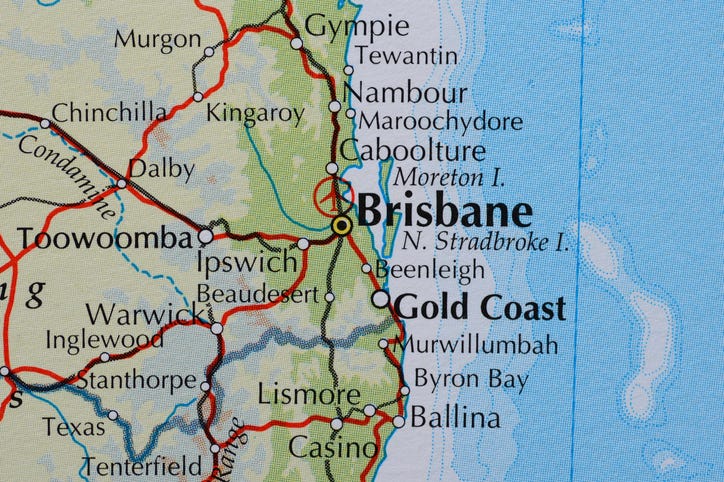
But, what about the terrible storms that hammer the Gold Coast? This is all the more reason this part of the world should be racing ahead with new building technologies that make much more resilient structures. Firms like Saltair Modular, Arcopod, Neo Living, and iBuild are routinely designed to exceed Australian cyclone ratings. It’s not just that housing and buildings can be built to withstand such weather events. They must be built this was to sustain a true expansion of the economy into these new areas. Interestingly, the Gold Coast already has the Advanced Design and Prototyping Technologies Institute (ADaPT), a cutting-edge research and innovation facility at Griffith University. Its whole purpose is to “bring together multi-disciplinary expertise across Griffith University in collaboration with leading industry partners to push the boundaries in advanced custom design, rapid prototyping and new materials, in what is called the ‘next industrial revolution’ or Industry 4.0. With advanced design at its centre and collaboration at its core, ADaPT combines leading-edge expertise in micro and nanoscience, complex imaging, 3D digital scanning, 3D functional modelling, bioengineering, industrial design, big data analytics, artificial intelligence and specialist expertise in designing advanced manufacturing processes”.ADaPT is already equipped with extensive 3D printing technologies “including multiple metal, polymer and bio printing capabilities”.
Healthcare is one of the fastest-growing sectors in the Gold Coast. The Gold Coast Health and Knowledge Precinct (GCHKP) now has a 200-hectare innovation ecosystem (a partnership between City of Gold Coast, Griffith University, Gold Coast Health, and Queensland Government) has seen $5+ billion invested in health, education, research, and tech. It integrates hospitals with Griffith University and Bond University and focuses on preventative health, biotech, clinical trials, and AI in healthcare. GCUH’s AI-powered medical imaging initiative launched in 2024, with trials in 2025+ for spinal cord repair, stroke intervention, and artificial heart tech. 2026 sees the development of HATRIC (Health and Advanced Technology Research and Innovation Centre), which is a $35M project.
On top of all this, the Gold Coast is already known as the “Hollywood of the South Pacific” due to its 30-year history of attracting major international film production and film special effects. It already has the massive Village Roadshow Studios, which holds the largest sound stages in the Southern Hemisphere, and over $1.9 billion in film production investment, making the Gold Coast a sustained filmmaking powerhouse. Baz Lurhman and Catherine Martin are continuing to invest in film facilities here, calling it “Goldiewood”.
Yet, Australians, especially Sydneysiders, continue to just slope along in the long queues to rent a place that’s pretty underwhelming. What’s the holdup on progress? Old people. It’s older people who run the planning permission. It takes at least 4 times longer to obtain planning permission for 3D printing and modular buildings than for conventional buildings. The planning people will say it’s about safety standards, but it’s not really. 30–45% of Sweden’s new housing stock is prefab, and it’s pretty cold there. Earthquake-vulnerable Japan now has pre-cut homes everywhere. No, it’s not about safety. It’s about changing standards. Safety is even easier to address these days, thanks to AI. Artificial intelligence is transforming building design and construction, shifting the industry from a reactive to a proactive approach, especially in safety. AI has already moved beyond pilots to become a baseline tool in many firms, with early adopters reporting double-digit reductions in incidents (20–50% drops in some cases via computer vision and predictive analytics). AI generates thousands of optimized layouts based on parameters like structural integrity, material use, wind loads, seismic risks, or evacuation paths. This reduces weak points such as poor load distribution which can cause collapse risks. AI incorporates safety constraints early, resulting in inherently safer buildings with less material waste and greater resilience. AI uses data-driven models to improve structural decisions, identifying risks that human review might miss, and enhancing compliance with standards such as Australia’s National Construction Code. In other words, it’s becoming easier to withstand storms like those on the Gold Coast.
So, here’s the key. The older generation controls the rules. The younger generation understands that the only way to bring the future forward faster is to break the rules. That does not mean there are no rules. Rules must evolve with technology.
Failure to evolve the rules will have profound consequences.
For example, we know for sure that people don’t have babies when they suffer from housing insecurity. That will have profound effects on the Australian economy. That will also be important for those Boomers. After all, who will buy their $5m-$10m

