


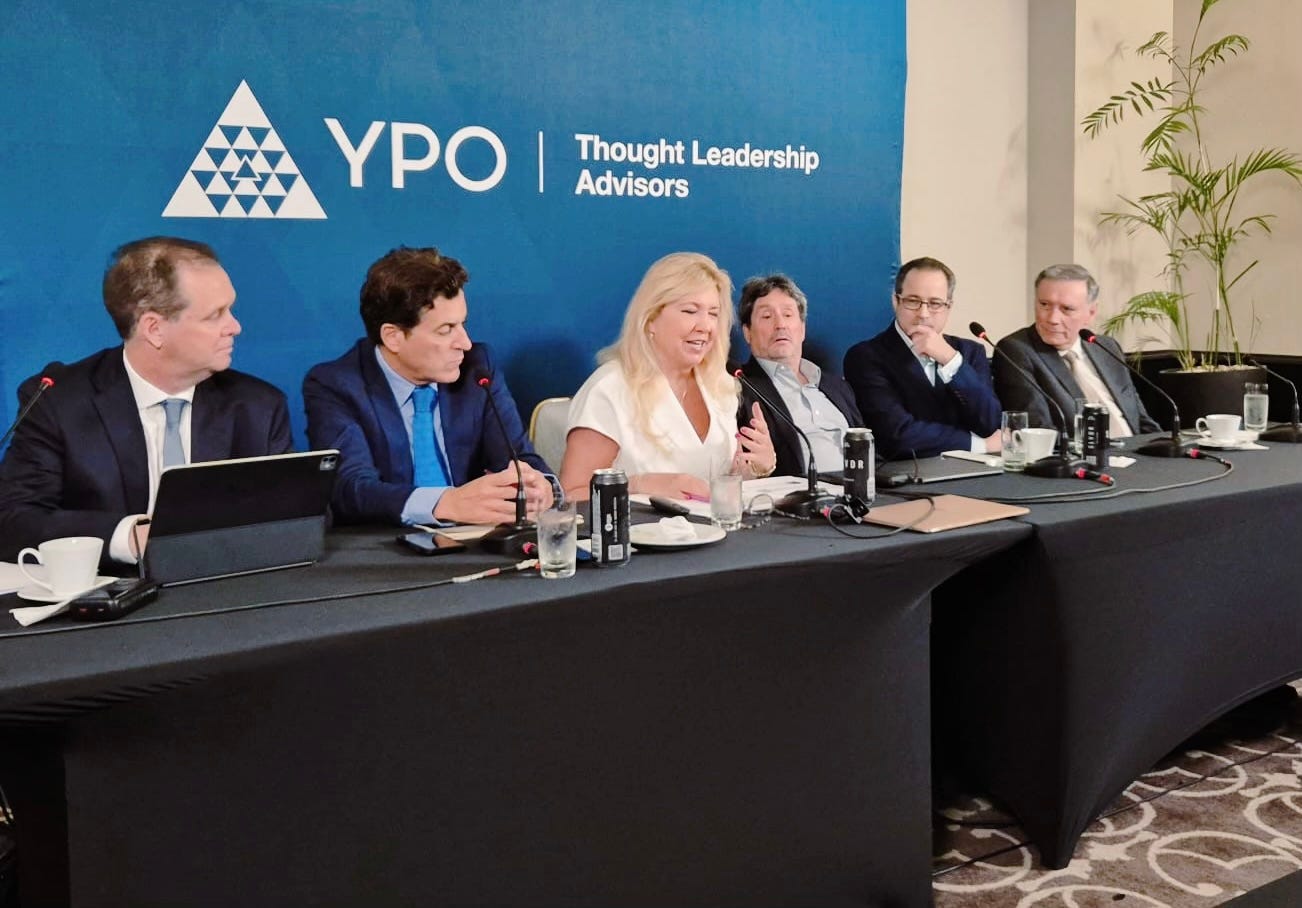
This week, I was moderating a panel for the Young Presidents’ Organization on Geopolitics. The team they assembled was formidable: Jamil Mahuad, The former President of Ecuador, Francisco Santos, the former Vice-President of Columbia, Hagai Segal, a professor from Columbia specializing in helping firms with geopolitics, Marco Vincenzo, a geopolitics strategy advisor to many firms and aviation technologist and Pablo Plá, The former CEO of San Miguel who is a master of corporate strategy around geopolitics. The thing I found most compelling was that each was deeply aware that geopolitics is always about humans. This stemmed from the fact that each had a very personal experience of geopolitics. Francisco, for example, was famously kidnapped by the Colombian FARC and chained to a bed for eight months. Jamil made the decision to dollarize the Ecuadorian economy, which ultimately led to his ousting in a coup d'état. Ecuador has now become a major center for global organized crime, a central issue in global geopolitics, following that coup. But the real issue is that geopolitics isn’t only about maps and models that no longer match the territory. It’s about cash flows, crime, and cognition.
Latin America is not what we think. It isn’t local, and it isn’t peripheral. It’s the new epicenter of superpower rivalries and global organized crime. Today, drug routes, crypto flows, and geopolitics intersect more directly in Latin America than anywhere else on Earth. When President Trump threatened Hamas over the hostages, they sent an armada to Venezuela. His message wasn’t just meant for Hamas in Gaza — it was aimed squarely at Hamas operations in Latin America. Hamas’s survival doesn’t depend solely on its presence in the Middle East anymore because it’s gone global. Hamas depends on its cash flows out of Latin America, and so does Syria, Hezbollah, al-Qaeda, and even Iran’s Quds Force. They all operate from the Tri-Border Area, where Argentina, Paraguay, and Brazil meet, as well as in Venezuela. The geopolitics of Latin America are no longer regional — they’re globalizing too, like everything else, with logistics and finance operations run with the same efficiency as those of multinational firms.
Few realize how deeply terror finance runs through the region. Groups like Hamas and Hezbollah generate vast sums from smuggling, mining, and the use of digital assets. As Adam Rouselle notes in Hezbollah’s Latin American Networks: Stablecoins, Smuggling and Sanctions, “Even as Hezbollah faces military and financial strain in the Middle East, its global fundraising networks remain intact — and increasingly agile, particularly in Latin America. Recent years have seen a shift toward crypto-based laundering, especially through stablecoins like USDT, blending seamlessly into Latin America’s booming illicit economies. U.S. and South American enforcement actions show growing evidence of digital-asset use by Hezbollah-linked facilitators, revealing a decentralized and highly sophisticated financial footprint.”
These networks thrive in sanctioned or unstable jurisdictions by building informal crypto ecosystems — OTC brokers, cash-to-crypto exchanges, and anonymous wallets — all designed for discretion and deniability. Hezbollah’s involvement in Venezuelan gold mining and narcotics trafficking is deep and deliberate. As Rouselle puts it, “Hezbollah’s presence in this architecture is not incidental; it is strategic, sustained, and digital.” Bitcoin replaces bullets.
It’s challenging for most Westerners to comprehend the profound impact of organized crime on modern geopolitics. At one end, it’s street gangs and narco networks. At the other, it’s sovereign states running illicit enterprises. The line between legal and illegal has all but vanished — what matters now is control.
What appears to be petty crime on one street corner is part of one of the most profitable, complex, and politically integrated systems on the planet. In some cases, entire governments have already annexed foreign economies through enterprise.
Once you see this, Latin America comes into focus in a different light. For many locals, Peru and Brazil are as much a part of China as Shenzhen is. Nicaragua is to Russia what Puerto Rico is to the United States. And El Salvador, under its new model of digital sovereignty, is arguably more strategically protected by Washington than even Puerto Rico.
The presence of the superpowers here isn’t abstract; it’s lived, daily, and profitable. President Trump’s crackdown on the cartels in Mexico and Venezuela is welcomed by the business community across Latin America. That’s because it’s not just about drugs. It’s about the unwelcome presence of all these foreign actors in the region.
Latin Americans even welcome the deportations of illegals in the US because, they argue, the gang and family members in the US send millions of dollars back to the home country every year. These remittances are mainly what keep a place like Venezuela going.
That’s why Trump sent the armada: F-35s, the US Navy’s “most battle-tested guided-missile Destroyer, the USS Stockdale,” Los Angeles-class fast-attack submarines, and P-8A Poseidon patrol aircraft and MQ-9 Reaper drones for air cover. By committing this fleet of assets and firepower, along with a couple of thousand marines, and then sending an additional fleet of KC-135 Stratotanker aerial refuelers to the Middle East, the US signaled to everyone (including Russia and China) that it is entirely content to engage in multi-front wars.
But it is too late to deal with most of Latin America militarily. Dark forces have learned what states are only beginning to grasp: commercial networks can infiltrate where armies fear to tread. The real battlefield now is cash flow.
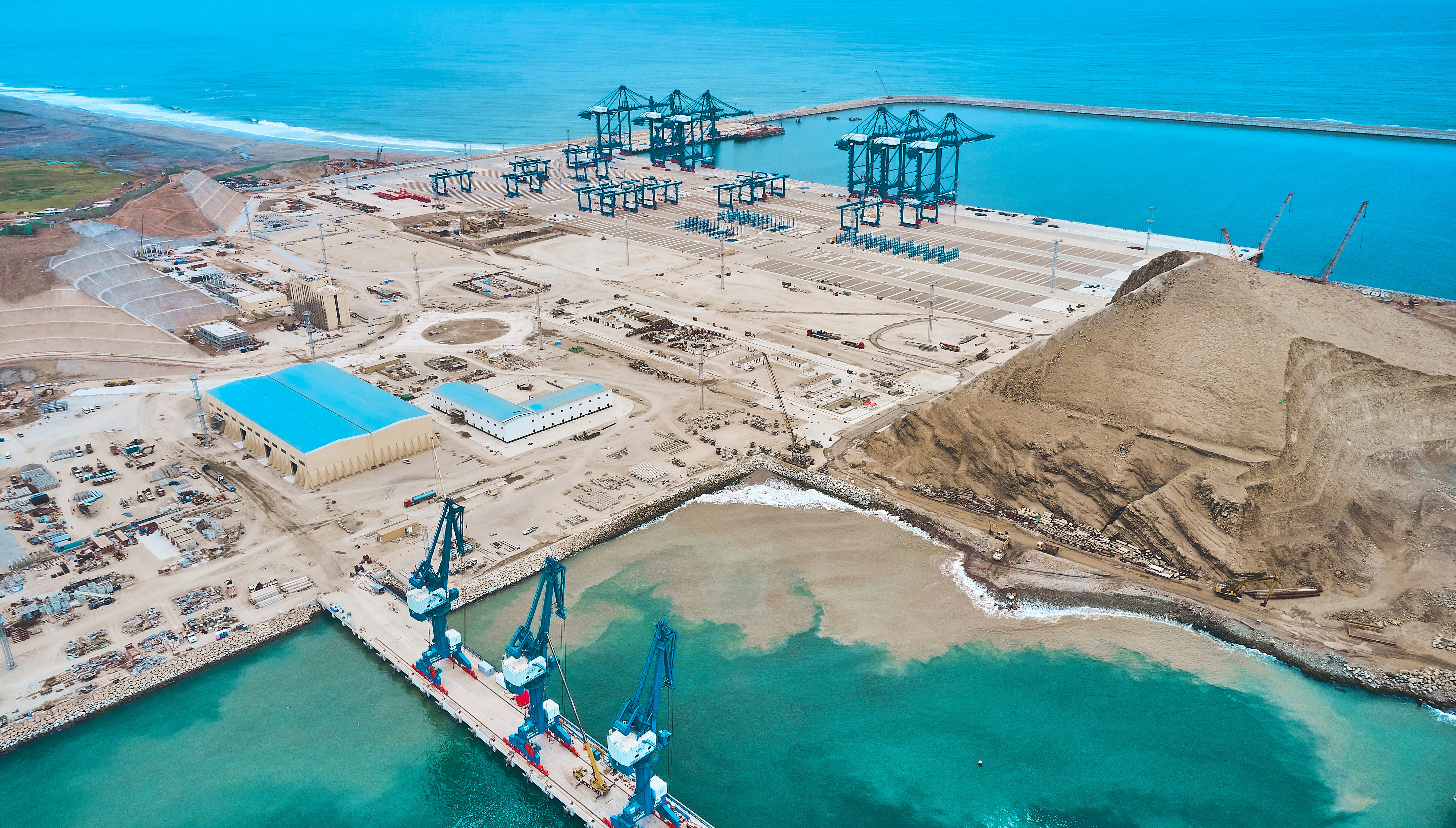
That’s why there’s such intense focus on the Puerto Chancay Port in Peru — famous even before it was built, and now finally open for business. It’s the largest port on the Pacific and arguably the most automated in the world. This is the Belt and Road Initiative at its sleekest: smart robotics meeting the ancient Qhapaq Ñan, the UNESCO-protected Inca Trail. Some call Chancay the Andean Pearl.
The port is a triumph of technological ambition and historical symbolism — China’s vision of the future running straight through Latin America’s past. It makes Latin Americans proud of their rich heritage and, for some, money-rich as well. By contrast, Mexico, Belize, and Guatemala have established the Great Mayan Forest Biocultural Corridor to protect indigenous lands and traditions — a noble cause, but one that encompasses only 5.7 hectares and carries no commercial significance. One is strategy; the other, sentiment. Which one wins?
Puerto Chancay is allowing China to rewrite the meaning of “Banana Republic.” It used to describe a place that grew bananas, endured chaotic politics, and struggled with corruption. Now, Chancay’s automation and logistics are transforming Ecuador into a global export hub — a high-tech banana republic, built by Beijing. The new Guayaquil–Chancay–Shanghai route cuts shipping times for the most valuable commodities to reach China in just 27 days – bananas. Orderly. Reliable. Ripe at the right time. This is a modern banana republic.

But, Guayaquil has also become the epicenter of global organized crime. The Albanian Kompania Bello, the Venezuelan Tren de Aragua, Russian and Chinese syndicates, and the Mexican Sinaloa Cartel all operate there. Trump knows what he’s targeting. He has officially designated Ecuador’s two most powerful gangs — Los Lobos and Los Choneros — as foreign terrorist organizations.
All these gangs are aligned with China’s efforts to build “a dry canal” to link the Pacific (Buenaventura) and Atlantic (Cartagena) ports by a rail link; this would be a direct challenge to the Panama Canal. These “dry canal” projects have been a dream ever since the Spanish Conquistadors dreamt of cutting a dry canal into place that would connect the Atlantic and Pacific. More recently, Nicaragua revived the idea in 1994. It was all talk for a long time but then certain things changed. Russia and China arrived. If Peru is now almost a region of China, then Nicaragua is now almost a region of Russia. This is evident in several ways. Notice that just a couple of days ago, Ukraine severed all diplomatic ties with Nicaragua after Nicaragua announced that it supported Russia’s claims to the four Eastern regions of Ukraine: Crimea, Donetsk, Luhansk, Kherson, and Zaporizhzhia. Nicaragua now tends to vote with Russia, Belarus, and North Korea. Why is President Putin focused on Latam when he has more pressing problems? The Lowy Institute in Australia writes, “The latest proposal