

The Hug Manifests

Dear friends,
A lot has happened since the Summit between President Xi Jinping and President Trump, and the subsequent high-level engagements between President Putin and President Xi. A lot is still happening. Some things are small but carry great meaning; even the throwing of a ball can cause a breakthrough in geopolitics, as we shall see.
When I published “The Hug and the Circumpunct,” the mainstream press treated the Temple of Heaven summit meeting between President Xi and Trump as nothing more than a transactional photo-op. Many told me that a true “Hug” or systemic realignment between these superpowers was impossible. But beneath the surface, I could see that a structural “Heartware” force had already begun to rewrite the global geopolitical landscape because no one can face the consequences of a kinetic conflict between the superpowers. Many said, “What’s a circumpunct?”
I said, it’s a symbol of peace. We need to be alert to symbols now.
Less than two weeks later, the data is in. Real-time policy shifts across the globe are vividly confirming the macro-narrative and structural pivots I mapped out. The data is clear. It turns out that there is a good deal of symbolism in this historic pivot, too, as we shall see.
First, the practical matters.
Rubik’s Cube
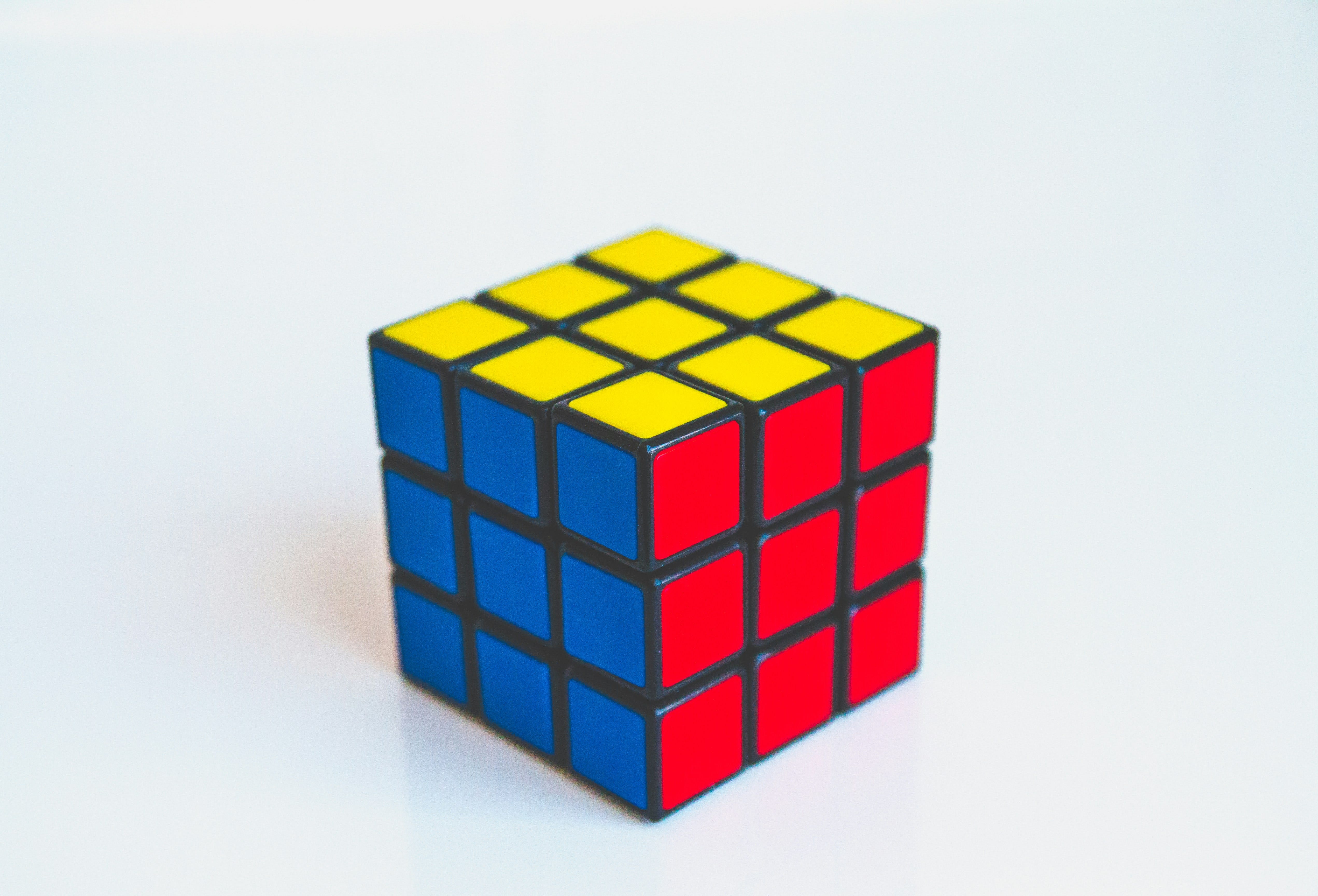
I argued that Trump is attempting to solve all the geopolitical problems at once. It’s like a Rubik’s Cube. All the pieces of the puzzle must move to resolve any one piece. China is needed on the side to help resolve Ukraine, Iran, and North Korea. That means Taiwan must be renegotiated, and Venezuela and Cuba must agree to remove Russian and Chinese operators and spying operations. The US must agree to stop fomenting conflicts via color revolutions, which means the White House must tame America’s shadow, the so-called Deep State. That means going after the true origin of COVID and of Iran’s uranium, for example
.
Today, we see the following:
Iran’s leadership is so fractured that we get utterly conflicting signals from them. But, in spite of that, Iran agreed to a deal that involves a 60-day ceasefire extension, a “gradual reopening” of the Strait of Hormuz, and a gradual unfreezing of Iranian assets. We learn more from third parties than from the players themselves. Pakistan’s Chief of the Defense Forces is now in Beijing, delivering the message that the talks in Doha are likely to conclude well.
The shift from a military blockade to an economic framework is in full motion, proving that they recognize the value of joining the new world order exceeds the cost of remaining in the old one. Notice the US approach to the closed Strait as well. Rather than maintaining a standard military blockade, the Hormuz theater is being transformed into an economic and legal framework. Iran has helped to create a transit scheme, establishing a de facto Persian Gulf Strait Authority (everybody together) to charge commercial ships for safe passage under the guise of “maritime security.”
Crucially, while Washington demands freedom of navigation, Beijing’s official post-summit readouts completely scrubbed the Iran issue. This deliberate, “mutually useful ambiguity” allowed stranded Chinese supertankers to quietly pay these new localized fees and resume their vital energy lifelines unbothered. The US and China aligned. A hug.
Uranium as Gold Dust
The Iranians keep disagreeing about the uranium because they understand how valuable this is to Trump. If Trump is right that the origin of their uranium is American, then Iran’s allies, Hilary Clinton and President Obama, are going to be permanently politically radioactive. These friends had sent Iran some $1.7b in cash. Under the Joint Comprehensive Plan of Action (JCPOA) deal. It’s hard to lose friends like that. Trump is offering both the possibility of something worse (you’ll never sleep well again, if we let you live) and something better (you can be a hero in history for agreeing to join The Abraham Accords).
Now Trump is going further and reeling in ALL the regional players, including Iran, and compelling them to embrace by all committing to The Abraham Accords, so that all have skin in the game. Call it a forced hug. Press reports are starting to say “Iran is willing to transfer its stockpile of highly enriched uranium to China, and is seeking guarantees from Beijing before proceeding with any agreement with the U.S., Saudi Al-Arabiya reports citing high-ranking sources.” We’ll see, but Iran’s nominal leader, Speaker Ghalibaf, and Foreign Minister Araghchi just landed in Doha for US-Iran mediation. It’s the first time Iran has sent both together. They must be feeling safe, and they look pretty happy. They must be feeling close to an actual decision. This is how deals get done. Back and forth, over and over, until all enter the circle. This must mean a two-state deal between Israel and Palestine is back on the table because that’s Saudi Arabia’s red line. That’s the ultimate death-or-embrace situation. Here’s the list of who needs to be in.
The Trump team released a new explanation of the origins of COVID that reallocates the blame away from China and toward rogue American scientists. See: The Lab Leak, The True Origins of COVID-19.
President Xi jumped to North Korea for an “emergency visit,” probably in anticipation of the end of the Armistice. For the first time in seven years, a North Korean sports team entered S Korea. North Korea’s Naegohyang Women’s Football Club arrived in South Korea for their match in S Korea on the 20th. This marks the first North Korean sports visit since 2018. N Korea, interestingly, used language that indicated that they. As one observer wisely noted (here), the nuances of language indicate that North Korea no longer sees relations as inter-Korean but as interstate. That’s a step forward. Better to have footballs flying across the border than missiles.
Cuba is surrounded by US forces (drones, ships) and out of gas, out of diesel, and out of friends. It’s about to be free of its past and will be reintegrated into the world.
Venezuela just released a 63-page blueprint for adopting American legal and business standards to secure foreign investment. It’s rejoining the world.
Russia and Ukraine had agreed to a ceasefire, but then Russia started firing Oreshnik, nuclear-capable hypersonic IRBMs at Ukraine. These carry multiple independently targeting warheads and are almost impossible to intercept. It seems there’s no hug, except that President Putin agreed to pay the $1b and to join the Board of Peace. Russia is also now warning the US about its strike plans for Ukraine’s capital. That’s a hug while still fending off your opponents (which includes not only Ukrainians but America’s shadow and the Europeans who continue to oppose all these deals).
The New Era of Geopolitics
Here’s a deeper dive into my forecasts:
The Forecast: I argued that the old framing of geopolitics is dangerously obsolete in an age dominated by AI, supercomputing, and digital infrastructure. I predicted that both superpowers would realize they must shift away from destructive espionage toward managing these god-like technological capabilities together.
The Validation: The head of China’s spy agency publicly agreed that a “new era” has begun, explicitly prompted by how AI and technology are shifting the landscape of possibility. This perfectly echoes my thesis that geopolitics is being reframed as a cosmic technological alignment problem rather than as a zero-sum game.
On May 23, 2026, Taiwan’s National Security Council Chief, Joseph Wu, officially revealed on X that China has deployed more than 100 vessels, including navy warships, coast guard ships, and marine survey/research vessels, in the regional waters surrounding Taiwan and stretching from the Yellow Sea down to the South China Sea. A Taiwan security official, speaking on the condition of anonymity, confirmed to the press that while Chinese vessels had been detected before the Beijing meetings, the number surged past 100 immediately after the conclusion of the Trump-Xi summit.
This sudden wall of ships rolled out just after President Trump referred to the situation as “the Taiwan problem” in a press gaggle at Joint Base Andrews, publicly signaling that arms sales could be used as a literal “bargaining chip”, and directly following Acting U.S. Navy Secretary Hung Cao’s announcement that the U.S. will indefinitely delay delivery of arms to Taiwan, treating pending arms sales as a massive “negotiating chip” held in abeyance while Trump negotiates with Xi.
Are the US and China swapping Cuba and Venezuela for Taiwan? Sort of. With conditions. Both the US and China are behaving in ways that confirm “this is mine and that is yours unless…”
The Forecast: Taiwan and China have quietly begun to normalize their relationship through bottom-up economic integration, explicitly highlighting the resumption of travel from Shanghai to frontline islands like Kinmen and Matsu to defuse historical military flashpoints.
The Validation: Official cross-strait directives authorized Shanghai residents to apply for both group and individual tours to Kinmen and Matsu. Regional scholars and Beijing policy analysts are increasingly noting that Beijing is deliberately using these travel restarts to convert former military tripwires into showcases of cross-strait commercial alignment. This is the exact “Make Money-La” dynamic I described.
North Korea and the Denuclearization Narrative
The Forecast: The U.S. and China silently blessed a joint effort to contain and absorb the North Korean problem. The old framework of isolated proxy conflict is fading, replaced by a multi-President, multi-year strategy where Xi and Trump ultimately aim to share the glory of lifting the 1953 Armistice.
The Validation: Just before the Trump-Xi Summit, China’s Foreign Minister Wang Yi visited North Korea. Immediately following the Beijing meetings, the White House released an official factsheet confirming that Trump and Xi were deeply engaged on the peninsula, explicitly stating the two leaders “confirmed their shared goal to denuclearize North Korea.”
Xi is heading to Pyongyang in his first visit since 2019 to mark the 65th anniversary of the China-DPRK cooperation treaty. Analysts immediately pointed out that this is a monumental rhetorical shift for Beijing, which had completely scrubbed that specific phrasing from its official diplomatic readouts since 2022. After Donald Trump confirmed aboard Air Force One that he had discussed North Korea with Xi and that he remains in contact with Kim.
Fresh commercial satellite imagery from early May, published by 38 North, shows a massive surge in construction activity at the long-dormant New Yalu River Bridge crossing. North Korea is rapidly expanding its customs and immigration facilities, erecting at least four massive new cargo warehouses, and clearing transport lanes. This facility, which has sat quiet for over a decade, is being engineered to function as the primary secure corridor for cargo trade and economic integration between Beijing and Pyongyang. Trains started crossing the Yalu River on May 16th after a six-year pause. A deal is in play to reduce North Korea’s nuclear threat and integrate its economy into China’s.
Notice how many industrialists showed up in Korea right around the summit. Sir Demis Hassabis arrived to announce that Google DeepMind had formalized an MOU to establish the company’s first global AI Campus in Seoul. The campus will serve as a direct operational pipeline where Google dispatches elite engineers to collaborate with Korean advanced networks. Kareem Ayoub (Vice President of AI Technical Strategy, Google DeepMind) executed the highly influential “2026 Leaders AI Roundtable” in Seoul, spearheading closed-door strategy sessions with top-tier executives from South Korea’s leading conglomerates (Hyundai, LG, CJ ENM, GS Retail) to embed DeepMind’s upcoming protocol-level software within the region’s physical manufacturing supply chains.
This is a heavy vote of confidence in South Korea, and it makes sense that Google has correctly anticipated the rapprochement between North and South Korea as a side effect of the superpowers’ alignment. Simultaneously, the White House announced that NVIDIA can now sell Blackwell chips to China, and that the CIA and NSA can also secure the high-capability chips they require. This is the “Invisible Bridge” manifesting—where access to the technological Kingdom of Abundance requires all players to step away from the shadow wars.

Bernard Arnault (Chairman and CEO, LVMH) stepped into Seoul in mid-May 2026, immediately following the conclusion of the superpower summits. Arnault’s presence signaled a rapid move by global capital to secure prime market positions within Asia’s primary technological safety hub. It’s pretty clear that industrialists now anticipate a boost to South Korea’s already ultra-massive tech wealth and cultural alpha. I said, culture ended the Cold War. This time, the US and China both agreed to create a Board of Investment to discuss future Chinese investment in non-sensitive U.S.